Due to a recent change in our pharmacy software system, the process for submitting refill requests online has now changed.
Our previous mobile app and your current login credentials will no longer work.
Please click the Refill Prescriptions tab to begin the new process.
Thank you for your patience during this transition.

Get Healthy!
- Posted July 29, 2026
Talking To Your Baby? Eye Contact Is Key To Language Development, Experiment Shows
Want to give your tot a brain boost when it comes to learning language?
Maintain eye contact as much as possible when you’re talking to them, a new study suggests.
Eye contact helps a baby decide what is important, acting as a switch that triggers synchronization of their brain waves with those of the speaker, researchers reported recently in the journal Nature Communications.
“As parents, we need to be conscious of the need to use social cues like eye contact and calling your child’s name, as these cues don’t just focus your child’s attention, they activate the learning process,” said senior researcher Victoria Leong, an affiliated lecturer at the University of Cambridge, in the U.K.
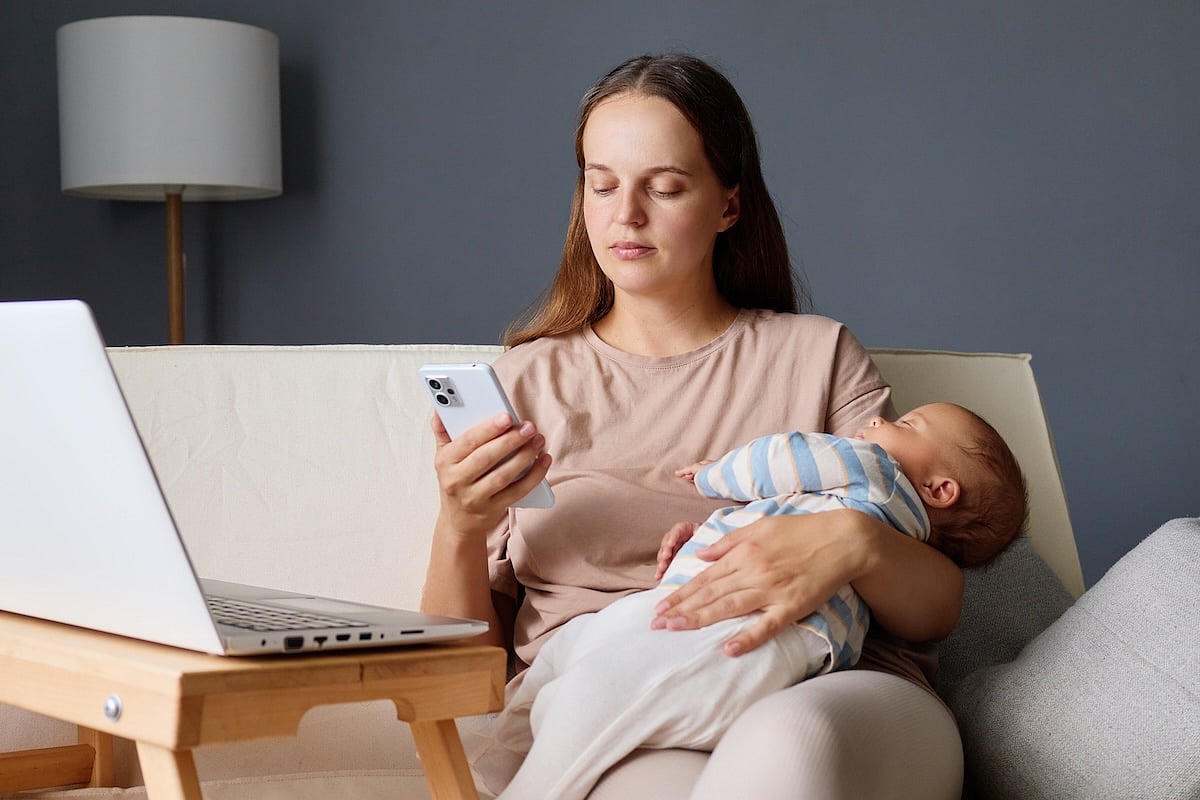
“If you're on your phone and distracted when you're trying to give them instructions or teach them something, there's less of a likelihood that they'll take it seriously or learn compared to if you put your phone down and look them in the eye,” Leong said in a news release. “This is an important way of signaling your intentionality, your seriousness, that you want them to pay attention and learn something.”
Prior research has shown that when an infant and adult make eye contact, their brainwaves sync with each other, researchers said in background notes.
However, it wasn’t clear whether this synchronization played a role in a child’s learning process, researchers said.
To figure this out, researchers recruited 42 infants with an average age of 9 months in Singapore and the U.K., and had them listen to three different nonsense languages.
Each of these languages was paired with a speaker who appeared on the screen wearing glasses. In one setup, the glasses were clear, while they were partially shaded and dark in the second and third scenario, making it difficult or impossible to see her eyes.
Afterward, researchers presented the infants with individual phrases from the different fake languages, as well as new made-up words. Infants were expected to spend more time looking at people using an unfamiliar language compared to one they were familiar with, researchers said.
Brainwave readings showed that the infants’ minds synced up with the speaker only when they could fully see the speaker’s eyes.
What’s more, infants’ brainwaves were more likely to be in sync with the speaker when they were actively learning the nonsense language.
“We let the infants listen to all three languages and it turned out they were selective in what they learned,” Leong said. “They're not just passive sponges. They heard all three languages, but only learned the one, which was when they could see the speaker's eyes.”
In fact, the level of synchronization was more important for predicting learning than even the individual brain activity the infants displayed during the experiment.
“Even when the infants seemed to be staring at a screen attentively, unless there was eye contact, nothing was going in — the information washed over them,” study co-author Kaili Clackson, an assistant research professor of psychiatry at the University of Cambridge, said in a news release. “The brain synchrony shows that it’s a selection process.”
The phenomenon proved true in both Cambridge and Singapore, suggesting that it is a universal human trait rather than specific to any one culture.
However, there are other social cues that can communicate the need to pay attention, such as smiling, pointing and using the infant’s name, researchers said.
These might play a more important role in language development in cultures where eye contact between children and adults is less important or even frowned upon, as it is in some Arabic countries, researchers noted.
“These cues are really powerful because when you preface new information with them, they tell the baby: this is important, you need to listen,” Clackson said.
More information
The U.S. Department of Education has tips for teaching language to babies and toddlers.
SOURCES: University of Cambridge, news release, July 28, 2026; Nature Communications, July 22, 2026


